
Groups like EarthFirst!, the Sea Shepherd Conservation Society, and the Animal and Earth Liberation Fronts stand at the forefront of activism today and often undertake activities that have proven to be highly inflammatory and extremely polarizing. These guys go way beyond Greenpeace's "non-violent direct action" and are often strong advocates of property destruction, most visibly through arson. For example, the ELF arson of a ski resort in Vail, Colorado, caused approximately 12 million dollars in damages and was done as a protest against the resort's expansion into critical lynx habitat. Its safe to say that these folks aren't big fans of slow negotiations and compromises when it comes to the protection of nature, and are about as far to the end of the spectrum of "willingness to allow human development" as possible. I have often sympathized with these groups and tend to agree with them that a massive decrease in population and reversion to tribal existence (or the extinction of humans altogether) is the only way to preserve our Earth in its current state. I even went so far as to buy a comically interesting book known as "Ecodefense: A Field Guide to Monkeywrenching" by Dave Foreman, which essentially is a big book on a million ways to tear sh*t apart - from tree spiking to vehicle sabotage to arson. Its pretty insane and I certainly wouldn't ever have the guts to do that stuff myself, but it raises an important question - How critical is it for the environmental movement to have people who take these risks for the sake of the Earth? Are they a help or a hindrance? David Brower discusses this very well in his Foreword to the book, "Eco-warriors: Understanding the Radical Environmental Movement" by Rik Scarce. I have take the liberty to retype it here for your reading pleasure in the hopes that it can shed some light on these questions:

More than a quarter-century ago I wrote, "We still need conservationists who will attempt the impossible, achieving it because they aren't aware of how impossible it is." Today, some people within the environmental movement possess a firm grasp of the impossibility of their task, yet they persevere. They are the conscience of the movement, although some people who are silent as they watch environmental destruction prefer to label them as environmental "radicals". An ecological reading of recent history, however, shows that the truly radical actions are perpetuated by those who have given us acid rain, the greenhouse effect, decimation of species, and who pillage ancient forest, mountain, and ocean treasures without considering their incalculable damage to the Earth and the future.
Those who lay waste to wild places and wild beings increasingly face the ire of the new environmentalists. For the most part the old guard of the environmental movement stand still, waiting for just what, I do not know, having left it long ago. Meanwhile the new guard generate the motion within the movement. They provide the constant new breath people are craving, the freshness of innovative tactics, strategies, demands, and resolutions. Such is the energy behind any movement. If we close off ourselves from creatively confronting challenges and refuse to learn anew, how can we expect to engage others? Nothing is stirring, not even a mouse, in the stagnant pool of Conventional Wisdom. We need new ideas coming into light upstream, from the springs of fresh water.
The new guard do share some traits with the old: up to a point they beg to be heard and plead with regulators and lawmakers for something better than just a charade. But unlike their predecessors, they abhor the next step, compromise. This is by choice. They much prefer to sit down in front of bulldozers, sit up in trees, break out of the polite conservationist mold, and intervene to expose a cruelty to living things that is hidden behind a cloak of product safety and progress. They are determined to protect and restore the Earth.
The new guard place Earth first and immoderate human wants far down the list. They recognize the intricacy of the web of life and the challenges of living as part of it rather than apart from it. They are too late and too few to reverse past destruction, but these people spend little time wringing their hands about it. Those who call them Cassandras forget that Cassandra told the truth. They do not qualify for worse epithets: coward, unbeliever, unhopeful, doubter, negativist, or realist ("We march toward annihilation under the banner of realism" - Richard Barnet). They are optimistic enough to think something can be done. They do not want to be like the practical man "who has made all his decisions, but lost the ability to listen, and is determined to perpetuate the errors of his ancestors."
Someone calls me a pessimist in this book because I once was fond of quoting Allen Morgan's prediction: "What we save in the next few years is all that will ever be saved." The optimists in the environmental movement note the nearly three decades of dust on that statement. Millions of acres of unspoiled land have been dedicated to preservation in the last quarter-century, but millions more have been released for development, and the attack on wilderness boundaries continues. There are still some fair ladies, but too many faint hearts, to succeed in winning them. Those fair places and the legitimate denizens are being lost at an ever-increasing rate to clear-cuts, over-grazing, dams, condominiums, pipelines, pavement, oil spills, acid rain, ozone holes, and complacency.
Yesterday's warriors smugly lean back in their chairs and insist that only a slow, deliberate course of action for the protection of the environment is satisfactory. Ninety million acres of wilderness saved, they say, and good work is being done to protect more; the bald eagle and buffalo were brought back from the brink of extinction; whaling is on the decline. Such successes take time, they say, time and compromise. Direct action - when the new guard go to the source of an environmental ill and attempt immediately to end the travesties being perpetrated there - only hinders compromise. Those who protest by carrying placards, sitting in trees, or vitiating the implements of destruction are ideologues in the eyes of the moderationists.
My half-century-plus of involvement with the movement prevents my being convinced by the cool rhetoric of the over-confident. I do not suspect that I ever will be. The white noise behind their words sounds like a materialistic mantra. "More, more, more," it spiritlessly drones on, "more money, more comfort, more microwaves. We can have more, more more while saving more and more wilderness."
We can't. Something is seriously askew in the optimists' equation, and I think it has its basis in ecology, specifically in the rate of change that the Earth's ecosystem can absorb and still maintain itself. Natural change in nature happens slowly, with rare and usually local exceptions, like surprise crashes of asteroids. Human-caused changes, as we now know, can occur with devastating rapidity. It takes millions of year to turn the plants of bygone eras into pools of petroleum and clumps of coal. However, in perhaps two desert tortoise life spans we humans made our own deadly fossil brew, spewing the poisons into the air and spreading them over our seas and shores. That more, more, more depends upon non-sustainable energy supplies, depleted and un-repletable stocks of rare and precious minerals, farmed-out croplands, and air and water that is no longer fit for human consumption: more environmental sacrifices for more stuff. They make unattainable the sustainable society we like to talk about.
If we cannot agree with the optimists within the environmental community, what then is our choice? First of all, do not give up on them. Join the mainstream organizations, the ones discussed in this book and the others. Encourage them to make a difference. Send them your dues, write letters, and nudge them in the right direction. Meanwhile, they can help coax along the system within which they operate.
Secondly, embrace the new guard alternative. As Rik Scarce shows, these activists are not addicted to pessimism. They want to eradicate its source. From my experience, they like a good time as much as anyone. They are not dour, groaning doomsayers. They do not think that constantly haranguing their fellow humans will make a difference. They get involved and make things happen. They laugh hard, work hard, and don't mind a beer or two. Toast them! They long to go smiling into the promised land, an Earthly place where the highest human ideals are embraced by all. They fight unselfishly and with deeply held committment for community, kinship, freedom, beauty, love, and justice for all - humans, other animals, land air, water, plants, and probably a few planets as well. The green wolf-fire in their eyes manifests a ferocity unmatched in the hundred-fifty-year popular struggle for protection of other beings, here now, or scheduled to arrive in decades and eons to come.
The time is right for embarking on new ways of living that will bring into balance the lopsided man-over-nature relationship. Today's industrialized society is addicted to Strength Through Exhaustion. It substitutes irreplaceables for renewables. Like the Forty-niners in their haste to gain wealth and live for today, we too often extirpate the riches that could sustain us, leaving a wasted landscape behind. Renewing their source will be monstrously expensive, but let our kids pay for it. Our challenge, and this gets to the heart of the environmental movement's message, is to live in the flow and yet refrain from mining, milling, and driving our successors and most of the rest of the world's species into oblivion.
These lifestyle changes cannot wait. If it takes creative mechanics on a bulldozer in the middle of an ancient forest to push society toward more healthful, ecologically sane ways of living, then so be it. The same goes for confiscating forty-mile-long driftnets that are stripmining the ocean. A liberated chimp will perish in your home town. End the practice of abusing them. Ecological grand larceny is what must stop, for no amount of creative mechanics can get an ancient forest back.
The time for compromise by the environmental movement has long since passed. A pluralistic society must compromise but the compromise must be between advocates, not compromisers. The public has grown tired of the lethargic responses by government and business to the eco-catastrophes now here. From Love Canal to the Grand Canyon, from the redwood forests to the Everglades, people are taking their planet's survival into their own hands in peaceful direct action. You and I need to be the eco-rescuers. The place to rescue is the Earth - all of it. Awaiting the outcome are trees, waterfalls, grains of sand, and generations of humans and other delightful living things yet to come aboard, but those genes are here now, needing our protection.
It is important for the old guard - contemporaries and those a decade or two younger - to realized where the new environmentalists are coming from and what drives them. The new guard have watched while the gentle attempts to accommodate larcenous attacks on the Earth and on the rights of the future fail to slow those attacks. They have remembered, from Nuremberg, that those who watch such attacks and remain silent and inactive are considered to be co-conspirators. The new guard have become impatient as those who execute laws turn the process of preserving everyone's freedom in the protection of a few peoples's property. They have seen the appeals process become a charade, decisions already having been made behind closed doors before the formal hearing opens.
If the new environmentalists' frustration and exasperation erodes their sense of humor now and then - and if they forget to add wit to their protests - they deserve to be forgiven and reminded that wit is their greatest asset. If exasperation should lead to desperation - and their protests are the early warning that desperation is not far away - those who refuse to forfend that desperation unwittingly become a dangerous driving force. They are co-conspirators in the violence that history tells us will follow. In a real sense, reckless prudence is co-conspiratorial.
A comparatively small group is now fighting in the hope that the eco-rescue effort is not already too late. That spirit of hope pervades this movement. Ordinary people feel it and rise to the occasion. Unlike nearly all revolutionaries of the past, these activists embrace life-affirming strategies and tactics that are inherently benign to all living things. Their cause isn't noble. It's essential. And if seeing love, compassion, beauty, and a bit of joy prevail makes you feel good, the cause is rewarding - and not impossible.
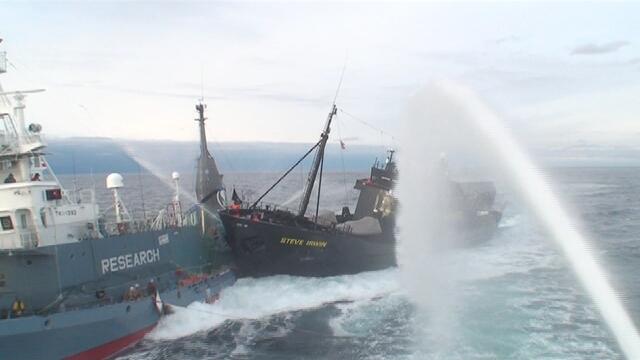
Hopefully you found that informative! Besides placing the importance of these hard-line activists, the article also indirectly mentions the importance of community to these groups. While I was never part of it, it is safe to say that these radicals often rely heavily on each other, especially in the field, which likely builds them into a very tightly linked community. Similar to any other group doing high-stress work (like military squads or what have you), these tight links and trust in each other are key to carrying out successful actions as a coherent unit. While we are weak alone, together we can do great things.
So, in short, I feel similarly to David Brower that radical activists have their place in this world and often can be the catalysts that bring about public awareness of important issues. However, their ideals raise the issue for me that the Earth is constantly changing and will never be able to be the same as it was 500 or 10,000 years ago, so should we really attempt to bring about such a reversion to these times? To me, these demands are unrealistic given our current global situation, but then, if we don't strive for reversion, what should we strive for? That I cannot answer, but I hope that society figures it out soon, for the good of us all.
With that, I sign off for the last time. I hope you enjoyed my ramblings and use them as motivation to stay optimistic and stay active in the defense of our environment!
Peace,


