Saturday, March 7, 2009

Concluding Thoughts: The "Radical" Activist Community

Its been my great pleasure to write this blog, and in doing so, I have learned a great deal about how to express myself around things that I am passionate about. However, I can't realistically see myself continuing it while school is in session, so I thought I'd conclude my musings with a topic that I was keenly interested in in my more normative days - radical environmental activism.


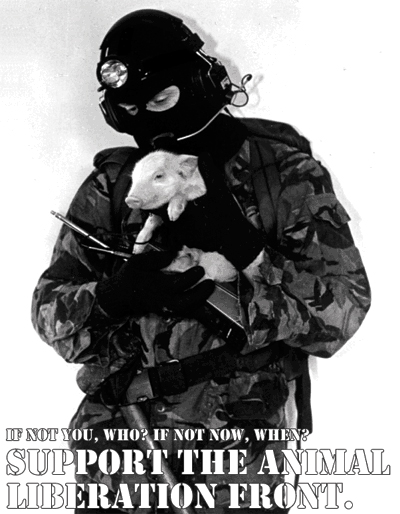
Groups like EarthFirst!, the Sea Shepherd Conservation Society, and the Animal and Earth Liberation Fronts stand at the forefront of activism today and often undertake activities that have proven to be highly inflammatory and extremely polarizing. These guys go way beyond Greenpeace's "non-violent direct action" and are often strong advocates of property destruction, most visibly through arson. For example, the ELF arson of a ski resort in Vail, Colorado, caused approximately 12 million dollars in damages and was done as a protest against the resort's expansion into critical lynx habitat. Its safe to say that these folks aren't big fans of slow negotiations and compromises when it comes to the protection of nature, and are about as far to the end of the spectrum of "willingness to allow human development" as possible. I have often sympathized with these groups and tend to agree with them that a massive decrease in population and reversion to tribal existence (or the extinction of humans altogether) is the only way to preserve our Earth in its current state. I even went so far as to buy a comically interesting book known as "Ecodefense: A Field Guide to Monkeywrenching" by Dave Foreman, which essentially is a big book on a million ways to tear sh*t apart - from tree spiking to vehicle sabotage to arson. Its pretty insane and I certainly wouldn't ever have the guts to do that stuff myself, but it raises an important question - How critical is it for the environmental movement to have people who take these risks for the sake of the Earth? Are they a help or a hindrance? David Brower discusses this very well in his Foreword to the book, "Eco-warriors: Understanding the Radical Environmental Movement" by Rik Scarce. I have take the liberty to retype it here for your reading pleasure in the hopes that it can shed some light on these questions:
More than a quarter-century ago I wrote, "We still need conservationists who will attempt the impossible, achieving it because they aren't aware of how impossible it is." Today, some people within the environmental movement possess a firm grasp of the impossibility of their task, yet they persevere. They are the conscience of the movement, although some people who are silent as they watch environmental destruction prefer to label them as environmental "radicals". An ecological reading of recent history, however, shows that the truly radical actions are perpetuated by those who have given us acid rain, the greenhouse effect, decimation of species, and who pillage ancient forest, mountain, and ocean treasures without considering their incalculable damage to the Earth and the future.

Those who lay waste to wild places and wild beings increasingly face the ire of the new environmentalists. For the most part the old guard of the environmental movement stand still, waiting for just what, I do not know, having left it long ago. Meanwhile the new guard generate the motion within the movement. They provide the constant new breath people are craving, the freshness of innovative tactics, strategies, demands, and resolutions. Such is the energy behind any movement. If we close off ourselves from creatively confronting challenges and refuse to learn anew, how can we expect to engage others? Nothing is stirring, not even a mouse, in the stagnant pool of Conventional Wisdom. We need new ideas coming into light upstream, from the springs of fresh water.
The new guard do share some traits with the old: up to a point they beg to be heard and plead with regulators and lawmakers for something better than just a charade. But unlike their predecessors, they abhor the next step, compromise. This is by choice. They much prefer to sit down in front of bulldozers, sit up in trees, break out of the polite conservationist mold, and intervene to expose a cruelty to living things that is hidden behind a cloak of product safety and progress. They are determined to protect and restore the Earth.

The new guard place Earth first and immoderate human wants far down the list. They recognize the intricacy of the web of life and the challenges of living as part of it rather than apart from it. They are too late and too few to reverse past destruction, but these people spend little time wringing their hands about it. Those who call them Cassandras forget that Cassandra told the truth. They do not qualify for worse epithets: coward, unbeliever, unhopeful, doubter, negativist, or realist ("We march toward annihilation under the banner of realism" - Richard Barnet). They are optimistic enough to think something can be done. They do not want to be like the practical man "who has made all his decisions, but lost the ability to listen, and is determined to perpetuate the errors of his ancestors."

Someone calls me a pessimist in this book because I once was fond of quoting Allen Morgan's prediction: "What we save in the next few years is all that will ever be saved." The optimists in the environmental movement note the nearly three decades of dust on that statement. Millions of acres of unspoiled land have been dedicated to preservation in the last quarter-century, but millions more have been released for development, and the attack on wilderness boundaries continues. There are still some fair ladies, but too many faint hearts, to succeed in winning them. Those fair places and the legitimate denizens are being lost at an ever-increasing rate to clear-cuts, over-grazing, dams, condominiums, pipelines, pavement, oil spills, acid rain, ozone holes, and complacency.

Yesterday's warriors smugly lean back in their chairs and insist that only a slow, deliberate course of action for the protection of the environment is satisfactory. Ninety million acres of wilderness saved, they say, and good work is being done to protect more; the bald eagle and buffalo were brought back from the brink of extinction; whaling is on the decline. Such successes take time, they say, time and compromise. Direct action - when the new guard go to the source of an environmental ill and attempt immediately to end the travesties being perpetrated there - only hinders compromise. Those who protest by carrying placards, sitting in trees, or vitiating the implements of destruction are ideologues in the eyes of the moderationists.

My half-century-plus of involvement with the movement prevents my being convinced by the cool rhetoric of the over-confident. I do not suspect that I ever will be. The white noise behind their words sounds like a materialistic mantra. "More, more, more," it spiritlessly drones on, "more money, more comfort, more microwaves. We can have more, more more while saving more and more wilderness."

We can't. Something is seriously askew in the optimists' equation, and I think it has its basis in ecology, specifically in the rate of change that the Earth's ecosystem can absorb and still maintain itself. Natural change in nature happens slowly, with rare and usually local exceptions, like surprise crashes of asteroids. Human-caused changes, as we now know, can occur with devastating rapidity. It takes millions of year to turn the plants of bygone eras into pools of petroleum and clumps of coal. However, in perhaps two desert tortoise life spans we humans made our own deadly fossil brew, spewing the poisons into the air and spreading them over our seas and shores. That more, more, more depends upon non-sustainable energy supplies, depleted and un-repletable stocks of rare and precious minerals, farmed-out croplands, and air and water that is no longer fit for human consumption: more environmental sacrifices for more stuff. They make unattainable the sustainable society we like to talk about.

If we cannot agree with the optimists within the environmental community, what then is our choice? First of all, do not give up on them. Join the mainstream organizations, the ones discussed in this book and the others. Encourage them to make a difference. Send them your dues, write letters, and nudge them in the right direction. Meanwhile, they can help coax along the system within which they operate.

Secondly, embrace the new guard alternative. As Rik Scarce shows, these activists are not addicted to pessimism. They want to eradicate its source. From my experience, they like a good time as much as anyone. They are not dour, groaning doomsayers. They do not think that constantly haranguing their fellow humans will make a difference. They get involved and make things happen. They laugh hard, work hard, and don't mind a beer or two. Toast them! They long to go smiling into the promised land, an Earthly place where the highest human ideals are embraced by all. They fight unselfishly and with deeply held committment for community, kinship, freedom, beauty, love, and justice for all - humans, other animals, land air, water, plants, and probably a few planets as well. The green wolf-fire in their eyes manifests a ferocity unmatched in the hundred-fifty-year popular struggle for protection of other beings, here now, or scheduled to arrive in decades and eons to come.

The time is right for embarking on new ways of living that will bring into balance the lopsided man-over-nature relationship. Today's industrialized society is addicted to Strength Through Exhaustion. It substitutes irreplaceables for renewables. Like the Forty-niners in their haste to gain wealth and live for today, we too often extirpate the riches that could sustain us, leaving a wasted landscape behind. Renewing their source will be monstrously expensive, but let our kids pay for it. Our challenge, and this gets to the heart of the environmental movement's message, is to live in the flow and yet refrain from mining, milling, and driving our successors and most of the rest of the world's species into oblivion.

These lifestyle changes cannot wait. If it takes creative mechanics on a bulldozer in the middle of an ancient forest to push society toward more healthful, ecologically sane ways of living, then so be it. The same goes for confiscating forty-mile-long driftnets that are stripmining the ocean. A liberated chimp will perish in your home town. End the practice of abusing them. Ecological grand larceny is what must stop, for no amount of creative mechanics can get an ancient forest back.

The time for compromise by the environmental movement has long since passed. A pluralistic society must compromise but the compromise must be between advocates, not compromisers. The public has grown tired of the lethargic responses by government and business to the eco-catastrophes now here. From Love Canal to the Grand Canyon, from the redwood forests to the Everglades, people are taking their planet's survival into their own hands in peaceful direct action. You and I need to be the eco-rescuers. The place to rescue is the Earth - all of it. Awaiting the outcome are trees, waterfalls, grains of sand, and generations of humans and other delightful living things yet to come aboard, but those genes are here now, needing our protection.

It is important for the old guard - contemporaries and those a decade or two younger - to realized where the new environmentalists are coming from and what drives them. The new guard have watched while the gentle attempts to accommodate larcenous attacks on the Earth and on the rights of the future fail to slow those attacks. They have remembered, from Nuremberg, that those who watch such attacks and remain silent and inactive are considered to be co-conspirators. The new guard have become impatient as those who execute laws turn the process of preserving everyone's freedom in the protection of a few peoples's property. They have seen the appeals process become a charade, decisions already having been made behind closed doors before the formal hearing opens.

If the new environmentalists' frustration and exasperation erodes their sense of humor now and then - and if they forget to add wit to their protests - they deserve to be forgiven and reminded that wit is their greatest asset. If exasperation should lead to desperation - and their protests are the early warning that desperation is not far away - those who refuse to forfend that desperation unwittingly become a dangerous driving force. They are co-conspirators in the violence that history tells us will follow. In a real sense, reckless prudence is co-conspiratorial.

A comparatively small group is now fighting in the hope that the eco-rescue effort is not already too late. That spirit of hope pervades this movement. Ordinary people feel it and rise to the occasion. Unlike nearly all revolutionaries of the past, these activists embrace life-affirming strategies and tactics that are inherently benign to all living things. Their cause isn't noble. It's essential. And if seeing love, compassion, beauty, and a bit of joy prevail makes you feel good, the cause is rewarding - and not impossible.
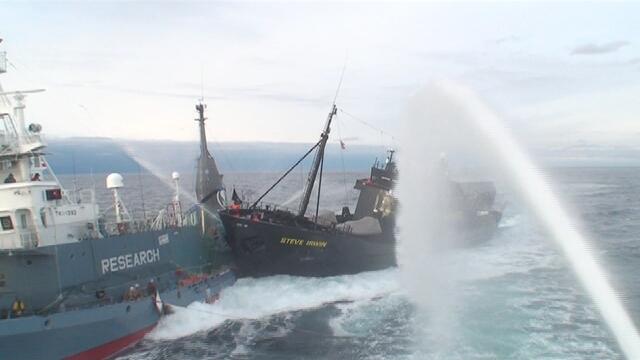
Hopefully you found that informative! Besides placing the importance of these hard-line activists, the article also indirectly mentions the importance of community to these groups. While I was never part of it, it is safe to say that these radicals often rely heavily on each other, especially in the field, which likely builds them into a very tightly linked community. Similar to any other group doing high-stress work (like military squads or what have you), these tight links and trust in each other are key to carrying out successful actions as a coherent unit. While we are weak alone, together we can do great things.

So, in short, I feel similarly to David Brower that radical activists have their place in this world and often can be the catalysts that bring about public awareness of important issues. However, their ideals raise the issue for me that the Earth is constantly changing and will never be able to be the same as it was 500 or 10,000 years ago, so should we really attempt to bring about such a reversion to these times? To me, these demands are unrealistic given our current global situation, but then, if we don't strive for reversion, what should we strive for? That I cannot answer, but I hope that society figures it out soon, for the good of us all.

With that, I sign off for the last time. I hope you enjoyed my ramblings and use them as motivation to stay optimistic and stay active in the defense of our environment!

Peace,

Sunday, March 1, 2009

Sustainability and the Youth Community

Today I'd like to write about the youth community, all 1 billion of us, in the context of sustainability and the future.


As I write this, Powershift '09 is invading Washington, D.C., and boy do I wish I was there!

http://powershift09.org/

The event has brought 12,000 youth leaders from around the US and world to participate in a weekend of solidarity and direct lobbying of government representatives around the issue of climate change. That's a pretty big number, and its so far looking to be pretty effective:

Lisa Jackson, EPA Administrator
http://www.youtube.com/watch?v=F1C7vMNQv2g

Ken Salazar, Department of the Interior
http://www.youtube.com/watch?v=4L2-U0Sxh-U&feature=channel

Van Jones, Green for All
http://www.youtube.com/watch?v=N7T9w82-l9k&feature=channel


Inspirational speeches all, and they certainly lend credence to Margaret Mead's famous quote:
"Never doubt that a small group of thoughtful, committed citizens can change the world; indeed, it's the only thing that ever has."


Of course, this is just one event, but one that, in my opinion, symbolizes the importance of community and the importance of youth in the struggle to save our planet.

There's something about youth that makes decision-makers listen - as Norm often said last term (when discussing public relations around risk and emergency management) 'its all about the children'. Rational or not, using the argument of "saving the earth for our children" is usually well-received and can be agreed upon by almost everyone (as can pretty much any other similarly-worded statement involving kids). Thus, we - the smart and motivated youth - can use this to our advantage to help motivate policy changes that may not have otherwise happened. It only makes sense, too, that we who would inherit the earth should have some say in how its handed over to us.

I am therefore a big supporter of youth involvement in politics and global events. While I have not had the fortune of participating in any of these things myself (due both to my generally anti-social nature as well as my complete lack of money for the necessary flights to the far-away meeting destinations), from what I can tell, these events serve as an excellent gathering of like-minded leaders in the youth community and help to build their (bonding, bridging, and vertical) social capital. From here, youth can take their connections and new-found knowledge back to their local communities and motivate others to take action.

When it comes to the issues of the environment - our life support system for the next 70ish years of our life - we need every youth we can get fighting hard for change, as the status quo is a difficult thing to overcome in this case. This is what worries me most - while 12,000 youth in one place at one time is pretty awesome, these types of events aren't happening nearly often enough or with nearly enough people.

This isn't just me talking either. For example, 1) the UN Programme on Youth admits to being a "very small part of the United Nations" (http://www.un.org/esa/socdev/unyin/mandate.htm), 2) Canada, and many other nations, currently have no youth representation at the General Assembly (http://www.un.org/esa/socdev/unyin/youthrep.htm) (Interestingly, we had one in 2005, but it was gone by 2006 - no surprise there... As well, when I emailed our Foreign Affairs ministry about this, they gave a wishy-washy answer and will likely not be bringing it back anytime soon), 3) Only 21 countries have signed up with the UN/ILO/World Bank's "Youth Employment Network - Lead Country" initiative (http://www.ilo.org/public/english/employment/yen/whatwedo/projects/lead.htm), which supports meaningful youth employment (and these 21 are mostly African nations that the average North American hick hasn't even heard of)

Instead, the vast majority of my generation has fallen victim to the many distractions (e.g. t.v., cell phones, music, shopping, video games {of which I was a victim for much of my youth - time I will never get back}, etc.) created by our decision-makers to keep us out of trouble and in our comfortable status quo bubble. I'm no conspiracy theorist, but it doesn't take a genius to see that widespread youth apathy and disengagement from political processes largely favours the rich conservatives rather than the more future-friendly liberal-progressives. I continually despair over the vast amount of young talent being lost into the system, with many people my age completely ignorant of the huge problems that our lifestyle poses to our future.

So what can be done? This is a difficult question to answer, but I can draw on my own experiences to attempt it. As I alluded to, I was not always the active and passionate person I am now. In fact, up until a year or two ago, I was your average lazy kid who played a helluva lot of video games and wanted nothing more than to have a steady job in a lab or doing outdoor work. I had no idea of the existence of any of this United Nations stuff or any of this youth activist rubbish - quite frankly, I thought active youth were all nuts and used to joke derogatorily how so-and-so "was one those types who's single-handedly cured AIDS in Africa". Luckily, I grew up a bit and expanded my world view, but it certainly didn't happen easily. As I went and continue to go through my growth and metamorphosis phase, I have found very little in the way of readily available support networks or youth leader communities. I read about these elusive youth off giving speeches at Poznan or what-have-you, but can't for the life of me find them anywhere or get involved in any of their work. (For example - I have attempted to contact the Canadian Youth Climate Coalition on several occasions to help out, yet no one has ever gotten back to me - likely all being 'too busy'). This is discouragement that I'm sure has turned many-a-youth back to their apathetic ways and has tempted me to as well. To answer my original question then, it seems that in order to combat youth apathy and build strong youth communities like that at Powershift, we need a much greater dialogue between the "enlightened" and the "unenlightened", so to speak.

This is an aspect of communities that can work to our disadvantage - their very nature is exclusionary, and, by being in one community, you are inherently not in others or have less time for others. In this case for example, these youth leaders are part of the youth leader community and likely spend much of their time together, liaising with important people and making their voices heard. However, by doing this, they're essentially shooting themselves in the foot, as they then have less or no time to spend doing the far less glamorous task of recruiting apathetic youth, who vastly outnumber youth leaders and who could therefore be a powerful voting force if mobilized. In the era of climate change though, this is not good enough - we cannot afford to have a self-limiting youth community in this time when we are needed more than ever to harass our decision-makers to save our planet. As Ryunosuke Satoro said, "individually we are one drop, together we are an ocean", and only by condensing more drops out of the mist of apathy can we create a tidal wave of positive change! (Forgive the cheesy metaphor, but I had to go for it!)

Moral of the story - get out there and start talking to all those people you consider as idiots (for lack of a better term). It may be painful and unglamorous, but it will do more good for the earth than any amount of ivory tower work that any of us can do in a lifetime. (Just don't ask me what to say, that's not my department!)

Sunday, February 22, 2009

Travel - What is it Good For?

I travelled quite a bit as a kid, with my parents taking me around North America and Europe on several occasions; however, in the last few years I've barely left B.C. and I seemed to forget about travel as an enjoyable activity. Luckily, those dark days are gone, as I recently caught a bad case of the travel bug and have spent much of my procrastination time this term thinking about it, so I figured a blog post on the matter would be only appropriate!


Its safe to say that travel and tourism are massive industries and often the biggest contributor to a developing country's GDP. Many who travel sing praises about it and its benefits to the traveller in terms of opening their eyes to the world. However, travel isn't all sunshine and smiles, as it causes huge environmental degradation. Inter-continental airplane flights alone have many associated impacts, including the release of huge amounts of CO2 from the jet fuel, but also the energy intensive production of the plane itself, as well less tangible factors like noise pollution.
Once at the destination, the traveller often becomes much more callous towards things like their waste output ("Recycle? F*ck that, I'm on vacation. Another mojito, boy!"), and the hotels and resorts that have been established to accommodate travellers are often hugely energy and waste intensive ("We spare no expense for our guests' comfort!"), and, as well, their construction often occurs within ecologically sensitive areas, since those are usually where the "nice views" are (e.g. the Burj Al Arab in Dubai or resorts along Latin American beaches).
Cruise ships are no better, often emptying their raw wastes right into the ocean, not to mention promoting a lifestyle of gluttonous excess.


Finally, many popular travel destinations are ecologically or historically sensitive areas, and, as beautiful as they may be (e.g. Machu Picchu, the Galapagos, the Indonesian or Brazilian rain forests, etc.), the more people that travel to these areas leads to more strain on their integrity, through such issues as the introduction of invasive species or the erosion of the local culture and loss of its language / history.

Damn, so why travel at all? And is there a way to do it sustainably?

Yes and no. To return to my tribalist ideals for a moment: in theory, none of us should travel, as any movement on our part has an environmental impact. In practice, of course, that isn't gonna happen. Travel, of course, isn't all bad - there is definitely something to be said for the potential life-changing inspiration that we "Annex I" nationals can obtain from travel to areas poorer than ours. But how can we value this non-tangible benefit with the very tangible downfalls listed above? While difficult, I would venture a guess that the net downfalls are currently exceeding the net benefits, if only because of our massively increasing population of travellers.


So how can we change this? - A change in mindset and priorities.
There are many increasingly popular forms of (more) sustainable travel, but they require us to shift from a destination- and "me"-focused mindset to a journey- and "us"-focused one instead. What do I mean by this? Well, compare these 2 possible trips:
1) Flight to Mexico, Drive to gated-resort community, Lounge on the beach being served by locals, Party in your 5-star resort
2) Hop on a cargo ship over to Asia, travel around the countries there by train, interacting with the locals, and volunteering with local social or environmental groups


While the second trip is by no means environmentally perfect, I would argue that it is the ideal that we must strive for in our travel, since not only does it reduce our environmental impact, but it also reminds us that we are guests - not Kings - in foreign lands and must conduct ourselves with a great deal of respect if we are to be given the same in return. I would argue that this second trip would strengthen our social capital (participation, connections, tolerance of diversity, value of life, social agency) immensely, slow our pace of life, make us appreciate things we normally wouldn't, and allow a greater opportunity for the aforementioned life-changing inspirations to occur. For example, we could learn such little things as sharing!:

http://blog.islandpress.org/297/tim-beatley-can-americans-learn-to-share

I am, of course, a realist, and know that resorts and travel for luxury purposes will continue to pervade our world, so first-order changes must accompany these lofty second-order changes. The eternal quick fix is technology, which we can harness to reduce our travel impacts immediately while the charismatic idealists among us go about promoting a future new way of life.
For example, eco-resorts have begun to take off, with a particularly impressive one being built in California:


http://earth911.com/blog/2009/02/04/new-resort-to-be-most-eco-innovative-in-world/

Recent advances in biofuels for aircraft are also giving cause for optimism. For example, the first test flights were recently completed using jatropha - a plant-based oil:

http://www.businessgreen.com/business-green/news/2233235/air-zealand-delcares-first

Big names are also now talking about the emissions from ships, which carry ~90% of the world's international trade goods:

http://news.alibaba.com/article/detail/finance/100010048-1-un-body-finalise-action-ship.html


All of this comes back to my original point, which is that I myself hope to travel sustainably in the coming years. Once I scrounge together enough money, I hope to completely circumnavigate the globe without the use of air travel. My attempted route will be ambitious (Vancouver to the East Coast via train, ship to Europe, train through Europe, travel with an overland truck expedition down and up through Africa, train back through Europe again, train across Asia to Beijing, train back through China to Tibet, Bhutan, and Nepal, then more trains around India, a ship from India to Southeast Asia, train around Laos / Vietnam / Cambodia / etc., ship down to Australia and travel around there, ship across to South America and do likewise, then travel up through the Caribbean to Florida and back home North-west through the States) and would take several years.
I would also attempt to give back as much as I could, through innovative volunteer projects such as those from the Global Volunteer Network:

http://www.volunteer.org.nz/programs/

or something a bit more off-the-beaten-path, such as WWOOF-ing (volunteering on an organic farm):

http://www.wwoof.org/

Large sums of monetary donations will be happily accepted to help my cause! :)

In short, travel is a key area that we can all work on to reduce our ecological footprints. By changing the way we travel, we can not only help maintain our environment, but also foster a much deeper sense of global community and social capital within ourselves!

Until next time..

Tuesday, February 17, 2009

Geo-Engineering and Other Technology Stuff

I used to brag to myself that I held anarcho-primitivist / tribalist ideals, and that the only way for humanity to pull itself out of the many messes we've made is to abandon our societies and revert to hunter-gatherer, tribal cultures (the ultimate community!), or, at the least, experience a large-scale move away from globalization. I recall sneering to myself when having a conversation with a classmate early on in the year who suggested that technology was the answer.

However, in the course of this academic year, I've been moving progressively away from this ideal to a more practical viewpoint. This has been mainly inspired by my increased consumption of news material and blogs, which tend to focus on interesting technological innovations. I suppose my continual surprise over the sheer creativity of some inventions has really been giving me hope that a combination of these could quite possibly allow us to continue on a fairly "painless" path (relatively speaking), compared to the alternatives.

See, for example this green design competition of some neat gadgets:

http://www.core77.com/greenergadgets/index.php

I not only refer to gadgets, however, but also large-scale innovations that could completely change the entire dynamic of our current problems. For example, my physicist friend recently informed me of a new attempt at a fusion generator, which, if successful and implemented, could completely solve our energy situation (I really wish people would talk about fusion more, it seems like such a brilliant solution to invest in).

http://www.popsci.com/scitech/article/2008-12/machine-might-save-world


Now, obviously, any new technology has many-a-hurdle to overcome and always takes longer to implement than expected, but there is still reason to be optimistic rather than pessimistic - mainly because its really the only avenue we can hope to achieve. (I doubt any except the most ardent and narrow-minded activist seriously thinks that all 6.7 billion of us will simultaneously agree to dismantle our society.)

However, just because its the only practical option, this does not mean we should support every new idea that may or may not work. My discussion in this case will center on an issue I've seen several articles on lately: "geo-engineering" - the use of technological techniques on a global scale to tinker with certain aspects of the environment.

My discussion info is drawn from these links:

http://www.telegraph.co.uk/earth/4641586/Can-geo-engineering-rebuild-the-planet.html

http://climateprogress.org/2009/02/12/geoengineering-bad-idea-iron-fertilization/

http://climateprogress.org/2009/02/17/so-much-for-geoengineering-2-ocean-dead-zones-to-expand-remain-for-thousands-of-years/

The premise of geo-engineering sounds good on paper: time is short and things like changing consumer habits and implementing clean energy take a longer time than we have in order to mitigate or avoid the effects of climate change, so in addition to those, we also need an immediate, short-term solution that could either prevent the warming caused by our GHG emissions or remove large amounts of these emissions quickly. Some very creative solutions have been proposed, such as fertilizing large areas of the ocean with iron (in order to stimulate algal blooms that would take up CO2), injecting sulfur into the atmosphere to reflect sunlight, placing vertical pipes into the ocean to transfer deep, cold water to the surface (cooling the surface would decrease the rate of global temperature increase), or launching trillions of transparent discs into space (which would act as lenses to reflect sunlight).

Cool. Great stuff right? Makes everything so much easier knowing that we don't have to give up our lifestyles in order to save the world, right?

Well, its unfortunately never as simple as that. While some of these types of projects may indeed be somewhat useful, many respected researchers in the field take a very strong view against these projects. See, for example, Bill Becker's blog posting on the matter - the 2nd link, above. I rather like his eloquence and so will quote him extensively:

* Geo-engineering is the practice of messing around with global life-support systems we don’t understand. If we did understand them, we might not be in the pickle we’re in today. Or at least it would be a greener pickle.
* Geo-engineering is a relatively new field based on the outdated and repeatedly discredited assumption that we humans are smart enough and wise enough to rule over the rest of the biosphere. Rather than applied engineering, we might call it “applied conceit”.
* Contrariwise and at the same time, geo-engineering is a symptom of our growing skepticism that we are able to stop climate change with rational solutions such as energy efficiency, renewable energy, carbon pricing and behavioral changes. In other words, interest in geo-engineering is rooted in the idea that although we’re too stupid to do the simple things that would slow climate change, we’re smart enough to do the improbable things.
* Geo-engineering is one outgrowth of our apparent learning disability about the law of unintended consequences. That law would be unleashed full-force once we started manipulating the oceans and atmosphere to create what one environmentalist calls “the Frankenplanet”. Geo-engineering is like a grownup version of whack-a-mole, where hammering down one problem causes others to pop up, to our great surprise.


He also uses the example of Biosphere 2, which you may recall as the project in the 90's that attempted to create a livable environment in a sealed enclosure, only to fail miserably on both attempts. This is the recurring theme towards anti-geo-engineering sentiments: how do we know that these "solutions" won't just make things worse, due to some factor we didn't consider or understand? The other argument stream, as Becker discusses, is an ethical one:

But what bothers me most about geo-engineering is this: It provides an excuse to avoid a profoundly important teachable moment. Climate change is painful proof positive that we are connected with and dependent upon the rest of the natural world. It tells us that our time as outlaws is over; we have reached the limits of the planet’s capacity to tolerate abuse. Global climate change calls for an evolutionary shift in consciousness first, and technology second. And the technology we need is eco-engineering, not geo-engineering.

If we deny this moment and fail to “institutionalize” the revelation of connectedness in our science, engineering, policies and behaviors, we will have demonstrated for all time that 1) we are the ultimate invasive species, and 2) we are not the most intelligent species, and 3) when it comes to our own survival, we have no more willpower than lemmings.


The man knows how to make a point, and while I'm sure that both him and I and everyone else would be thrilled if a practical, completely understood and effective geo-engineering solution was created, the current fact of the matter is that there isn't one, which raises the question of / leads to Becker's final point of funding. As we all know from economics, scarcity is a fact that we have to deal with when making decisions. How can we get the most bang for our buck? This thus comes back to my original point, which was that while I have a newfound support for technology, some investments are better than others.

From what I've seen, it seems like geo-engineering could well become a fiasco like that of corn-based ethanol, only on a much larger scale. I feel that we'd be much better off investing our funds in the "rational solutions", even though they may be more painful. As Becker says:

If the federal government had a Deputy Assistant Secretary for Ecological Literacy, Interspecies Liaison and Intergenerational Morality, and if I were that person, and if the geo-engineering industry came to me for billions of dollars to fund its “emergency response strategy to cooling an overheated planet”, I would respond as follows:

To qualify for these funds, you must first demonstrate that you have learned to understand “the accumulated evolutionary wisdom” (the Economist’s phrase) in natural systems. Until you can produce a fiber as strong as a spider’s silk, for example, you have not shown that you are better engineers than nature.

Come back when you can show us how to protect our coastlines as well as natural systems once did and to prevent flooding as well as riverine ecosystems did before we destroyed them.

Come back when you have learned to build a levee that doesn’t fail and when we’ve shown a sufficient attention span to keep our bridges from falling down. The geo-engineering projects you envision will require diligence forever, a level of commitment we have not yet demonstrated.

Come see me when you have created buildings that produce more energy than they use, cities that do not sprawl, and power plants that don’t pollute. Show us the engineering solution to lifting the world’s people out of poverty without bankrupting our natural capital.

Come back when you have stopped trying to be god-like and you have learned to be child-like, filled with wonder and curiosity at the natural world and anxious to learn what billions of years of evolution can teach us. Come back when you have the humility to acknowledge that your true laboratory is not in a building, but in the biosphere itself.

We don’t have to be Luddites to draw the line at geo-engineering. There has never been a more urgent need, or more fertile ground, for intelligent invention. But for both moral and pragmatic reasons, invention must help us fulfill our potential as residents of the natural world, rather than striving to “live” apart from it.

Friday, February 6, 2009

Good Jobs, Green Jobs! (And other UN- and economy-related things)

In the last year so, I have morphed into a total UN nut, so its only appropriate for me to do a post or two about them (the true "global community")! :)
Today's post will cover the economics, so to speak, of our current situation versus a 'green economy'.


The United Nations Environment Program's (UNEP) director, Achim Steiner, gave a great speech at the "Good jobs, Green jobs" conference that took place just a couple days ago. You can find the full text of it here:

http://www.unep.org/Documents.Multilingual/Default.asp?DocumentID=563&ArticleID=6065&l=en&t=long

Some of the highlights for me were:

"Sir Nicholas Stern, on behalf of the UK Government has estimated that global GDP could be cut annually by five per cent and perhaps as much as 20 per cent unless the world deals with rising greenhouse gas emissions."

"The Intergovernmental Panel on Climate Change (IPCC), established by UNEP and the World Meteorological Organisation, estimates that somewhere around 0.1 percent of GDP spent annually until 2030 can lift the threat of climate change."

"If we are to deal with the immediate crises and the ones just around the corner, then every dollar, Euro, peso and yuan is going to have to work smarter and harder.
The investments being made now in order to counter the various "crunches" need to set the stage for a resource efficient, innovation-led, economic renaissance.
One that tackles the fundamentals, rather than papers over the cracks: one that sets the stage for Green Economic growth."

"President Obama has called this the era of responsibility. I share his sentiments.
[...]
The era of responsibility is generational but also inter-generational - in bailing out the banks and rescuing jobs we cannot transfer the costs and the debts to our children - we cannot compromise their right to decent work and livelihoods; to a healthy and functioning planet."

"[L]et us not forget that the President who signed the UN Charter in San Francisco 64 years ago, and who saw the value in multilateralism as a force for good in the world was none other than Franklin D. Roosevelt - the architect of the New Deal that powered America out of recession and inspired the Green New Deal being taken forward in the White House and elsewhere today"


In addition, I'd like to call attention to some numbers that Norm gave us in our Environmental Management course last term:

By Barry Ritholtz - November 25th, 2008, 7:19AM

I found that whenever I discussed the current bailout situation, people had a hard time comprehending the actual numbers involved. In doing the research for the Bailout Nation book, that was a problem. I needed a way to put this into proper historical perspective.

If we add in the Citi bailout, the total cost now exceeds $4.6165 trillion dollars. People have a hard time conceptualizing very large numbers, so let’s give this some context. The current Credit Crisis bailout is now the largest outlay in American history.

Jim Bianco of Bianco Research crunched the inflation adjusted numbers. The bailout has cost more than all of these big budget government expenditures – combined:

• Marshall Plan: Cost: $12.7 billion, Inflation Adjusted Cost: $115.3 billion
• Louisiana Purchase: Cost: $15 million, Inflation Adjusted Cost: $217 billion
• Race to the Moon: Cost: $36.4 billion, Inflation Adjusted Cost: $237 billion
• S&L Crisis: Cost: $153 billion, Inflation Adjusted Cost: $256 billion
• Korean War: Cost: $54 billion, Inflation Adjusted Cost: $454 billion
• The New Deal: Cost: $32 billion (Est), Inflation Adjusted Cost: $500 billion (Est)
• Invasion of Iraq: Cost: $551 billion, Inflation Adjusted Cost: $597 billion
• Vietnam War: Cost: $111 billion, Inflation Adjusted Cost: $698 billion
• NASA: Cost: $416.7 billion, Inflation Adjusted Cost: $851.2 billion

TOTAL: $3.92 trillion

(data courtesy of Bianco Research)

That is $686 billion less than the cost of the credit crisis thus far.

The only single American event in history that even comes close to matching the cost of the credit crisis is World War II: Original Cost: $288 billion, Inflation Adjusted Cost:$3.6 trillion

The $4.6165 trillion dollars committed so far is about a trillion dollars ($979 billion dollars) greater than the entire cost of World War II borne by the United States: $3.6 trillion, adjusted for inflation (original cost was $288 billion).
Go figure: WWII was a relative bargain.

I estimate that by the time we get through 2010, the final bill may scale up to as much as $10 trillion dollars…


So what does all this mean? Put quite simply, our current economic system has failed us. These trillions of dollars of debt that we are creating are a result of mismanagement, a vested interest in the status quo, and a lack of foresight by leaders and policy-makers. But this is why I like the UN so much - they have the inspirational ideas - like those that Steiner mentioned - and institutional agency to bring about positive change.

Recently, as Steiner mentioned, UNEP launched its "Global Green New Deal" initiative, which would see a heavy investment in clean energy and other green technology in order to create jobs and set the stage for our future economy. Consensus from all the top minds, whether it be Sir Nicholas Stern, R.K. Pachauri, Yvo de Boer, or Al Gore, have concluded that this green economy is the only way to go. I get particular hope from that fact that only 0.1 % of our GDP spent annually until 2030 could lift the threat of climate change. We have all the necessary technology and intellect to solve these problems, all we need is leadership! This is why I have become such a firm believer in the top-down approach - unless we have knowledgeable, competent, and gutsy leaders to adopt these proposals, no amount of grassroots community activism will matter (especially since, these days, an entire forest can be eradicated with the stroke of a pen).

So how does this relate to communities? Well, the UN is the biggest community of all - the global community, and while we often don't see its effects in our daily lives, it and all the other multinational partnerships and groups (e.g. World Bank, WHO, WMO, etc.) are the spiders on the intricate web of smaller communities. For example, I wouldn't be doing a major project for BCHC on training local governments to respond to climate change and implement the Climate Action Charter if the B.C. government hadn't passed that bill, and the B.C. government wouldn't have passed that bill if the Canadian government hadn't ratified the Kyoto Protocol, amongst other conventions it is a party to. And so we see that effective top-down leadership correspondingly leads to effective local and community action.

Everything is interrelated!

Saturday, January 31, 2009

Hospitals Jump on the Bandwagon

I've seen a couple interesting news articles on hospitals and sustainability lately, so I figured I'd devote a blog post to it, which will also help lead into 2 other issues I haven't yet discussed.

The first story is found here:

http://earth911.com/blog/2009/01/23/dell-childrens-first-leed-hospital-in-world/

The gist of it is that a children's hospital in Texas received a LEED platinum designation - the world's first for a hospital. They will be implementing such things as reusing 47,000 tonnes of material originally used on airport runways, using water-conserving utilities, xeriscaping, using 40% fly ash in the concrete instead of Portland cement, and installing locally made / eco-friendly / low VOC products throughout.


While interesting in itself, I think this relates strongly to the larger issue of "hospital health" (which can be tied in closely to community health). I remember reading an article in the Macleans magazine a year or two ago that discussed how the design of a hospital (in every sense of the word) actually has a very significant impact on things like how fast patients recover or whether they get sicker by contracting other disease or infections. The article claimed that the classically designed hospital, with the long hallways, multiple patients per room, etc. had shown to be a bad design for keeping people healthy in hospitals and that architects and designers were now looking to totally redesign new and old hospitals with this in mind. So with that in mind, I think its great that new hospitals also include sustainability measures, as I have no doubt that the cleaner, greener environment would help both the physical and mental recovery of the patients ('mental' meaning - you'd probably feel better psychologically if you were in a beautiful room with fresh air flow and feel-good green products everywhere than you would stuck in a 4-bed per room, industrial feeling, sickly room). As the president and CEO of the children's hospital says, "Our motivation to pursue LEED Platinum was not just environmental. Being a ‘green’ hospital has a profound, measurable effect on healing. What’s good for the environment and good for our Mueller neighbors is also good for our patients."

The health of the hospital, of course, directly impacts the health of one's community as well. If people end up stuck in a hospital for longer than anticipated due to illness from the hospital itself, this not only has an economic cost (of the hospital needing to continue to support the patient, and of the patient not working), but also a strong social cost (stories are spread about the hospital and it comes to be seen as a place to be avoided, an illness in itself) (also, more directly, it translates into time spent away from friends and family and what would likely be an increase in the patient's risk of depression or other psychological ailments). So the moral of the story is: everything is interconnected and a healthy and sustainable hospital contributes to a healthy and sustainable community!

The second story is found here:

http://www.guardian.co.uk/society/2009/jan/26/hospitals-nhs-meat-carbon

This article takes the issue of hospital sustainability beyond that of simply patient health and focuses on the emissions that hospitals produce. Since health care is something we classify as an 'essential service', we tend to not talk much about its environmental impact, but this article highlights an interesting study done by the National Health Service (in the UK) that looked at health care's environmental impacts and is proposing actions to help mitigate them. The article mentions that a recent study published by the NHS showed that the sum total of CO2 emissions for all of its outposts in the UK produced more than 3% of the country's total, meaning that, if it were itself a country, it would be the 81st biggest polluter in the world! Fascinating stuff, which is why the NHS began proposing a wide range of solutions to lower its impacts, which include a whole slew of things, in the hopes that it can cut its emissions by 80% by 2050.

One of the highlights of the plan, and the title of the article, was that the NHS would encourage hospitals to take meat off their menus or to offer fewer meat and dairy products in general. This of course, makes me very excited, as I recently became a vegetarian and speak highly of it as a way of life. Animal welfare and ethics aside, most people don't realize the huge environmental impacts of the meat industry. I had the unfortunate chance to talk about this with an average North American hick, whose response was, "What, cow farts? Hahaha" (he said a bunch of other stupid sh*t too, but I won't pain your eyes with it). Yes, cow farts, but also huge issues with land degradation and advancement of farmland onto natural areas, highly polluted runoff from the combination of animal waste and fertilizers, the energy costs of producing animal feed, and emissions from the transportation of animals and meat products to and from the processing facility.

See this article for the impacts of meat on a purely CO2-based level: http://www.sciam.com/article.cfm?id=the-greenhouse-hamburger

More and more scientists are coming out in favour of a vegetarian diet as the best way that an average person can make a difference both on their CO2 emissions and also on their health. Nobel Peace Prize winner R.K Pachauri, head of the IPCC, and one of my role models, is a strict vegetarian and recently began advocating it on the global stage.


While I could go on (and I most certainly will in the future), I will simply sum up by saying that, yes, meat is delicious, but we are (both fortunately and unfortunately) the transition generation - the one that has to change and break with old ways or else risk extinction from global ecological collapse. Perhaps in the future, when everything gets sorted out, we will be able to raise animals for meat in a sustainable way, but for now, we must do all we can to reduce our emissions, and refraining from meat (and not driving, obviously) is a great start to this, so I am pleased and heartened by the NHS's move towards this. Hopefully other meal-providing services, like the airline industry, will move towards this as well!


More resources for all of you who are considering the switch (don't worry, none of these links contain pictures of animals being killed or any of that stuff):
http://www.alternet.org/story/12162/?page=entire
http://www.vegpledge.com/
http://www.hippy.com/article-22.html
http://www.vegcooking.com/
http://www.petaliterature.com/VEG297.pdf

I know myself that, while I endorsed vegetarianism for awhile, I was always held back by the question of "what do I cook?". While there will no doubt be a rocky transition period, its actually very easy to find and cook good vegetarian meals. Buy a couple cookbooks that catch your eye (Chapters has a good vegetarian section, or use Amazon), or just hit up Google! I'm always happy to provide help / moral support as well! :)

Monday, January 26, 2009

Vertical Farming and Other Agriculture Stuff

Food, agriculture, and food security are hot topics these days, with good reason. One of the problems with cities has always been that we rely on food to be grown elsewhere and shipped / trucked to us. This creates all sorts of problems with respect to costs and the stability of the system. Cities allow us to live at a much greater population density than what could be supported by the physical area of the city's footprint, and as this density increases, we rely on increasingly complex and expensive supply chains to be able to get all the food into the city that is needed to sustain us. This makes for an unstable system, for if the supply chain ever broke down, the collective millions of us in cities would essentially have no way of getting food.

What could cause such an instability? Climate change, of course!
Check this article out:

http://www.guardian.co.uk/environment/2009/jan/09/food-climate-change

Thanks to rising temperatures and changing weather patterns, scientists predict that half of the world's population could face food shortages by 2100. Half! (Which will be around 4.5 billion by then, at least, if the population growth models hold.) This is no laughing matter and we're going to need big solutions fast, otherwise these food shortages will likely hit our cities especially hard.

So how can we approach this issue? Well, I came across 3 neat ways via the news in the last few days, and I'm sure there's many more. The most important thing, of course, is that we gain the willingness to act - once we have motivation, ideas soon follow. It is, of course, excellent then that we now have Mr. Obama as President of the US, as his leadership will hopefully spur the developed world into tackling issues like these. His speech today regarding his climate and energy plan was particularly compelling, and involved phrases like, "no single issue is as fundamental to our future as energy" , "The days of Washington dragging its heels are over" , and "We will not be put off from action because action is hard." Woohoo!

Anyways, back to the ideas:
For an issue as huge as food security, we need action on an international and national level, but also on a local community level. For example:

http://www.enn.com/lifestyle/article/39052

The city of Seattle recently extended its program known as "Green Seattle Partnership", which is an urban reforestation project with the Cascade Land Conservancy that aims to restore 2,500 acres of parkland by 2025. This is a good thing because not only does increased parkland "'improve our infrastructure and strengthen the social fabric of the city'" (Gene Duvernoy, from the article), but it could also be used for local food production. While such an idea would still require some hurdles to jump over, it at least retains the biodiversity in place so that, if a disaster struck, the city wouldn't be completely screwed!

Change also needs to occur on an individual level, by getting people inspired about growing their own food. See, for example, this article:

http://www.enn.com/agriculture/article/39054

While it does take time, growing food is still easier than one would think and every little bit you can contribute brings you one step closer to self-sufficiency should a disaster occur. Of course, getting people motivated to get their hands dirty is the hard part, especially when there's upfront expenses involved. As well, we North Americans have grown fond of having exotic fruits and vegetables available to us all through the year, so convincing people to switch back to the good ol' potatoes and carrots all through winter would be no easy task. But again, I think the goal here is not necessarily to become wholly self-sufficient, but to simply to be able to provide at least some of your food (I certainly wouldn't mind living off potatoes if a disaster struck and there was nothing else to eat!) and to get back in touch with our food and how it is grown, which is a whole other issue occurring in developed societies.

Finally, and my favourite - why not build farms like we build apartment buildings?
"Levels Jerry!" (Kramer) :)


http://features.csmonitor.com/environment/2008/12/24/cities-may-sprout-vertical-farms/

While this idea faces a vast array of technical challenges, if we could pull it off, it would potentially be able to not only make our cities self-sufficient, but also allow us to decommission a lot of our farmland in the country and allow this land to return to nature!

Ahhh the optimism. :)

Thursday, January 22, 2009

What Community Means to Me

I figured its probably about time that I do a post that has some direct relevance to our course, so here's one about the topic that Chris addressed to us in lecture 2.

What does community mean to me?


This is a difficult question for me to answer, mainly because of who I am as a person. I generally define myself as a very 'hard logical' person (i.e. the bottom-right quadrant of the BCHC's integral process diagram), to which things are black or white, with anything in the middle being hypocrisy - a trait that I detest. Because of this, I essentially view almost every human being (myself included) as a hypocrite in some way or another. This causes me to often judge people very harshly and cut through the bullsh*t in any situation. These traits, coupled with a slight superiority complex and a healthy dose of introversion means that I don't talk much and form close-relationships far less frequently than others. Now before you start thinking that I'm about to break out in tears or something - I'm quite content in my current situation, since, again, I feel that my way is the only way and the best way! :)

So how does all that sentimental stuff help to answer the question? Well, it helps to explain the fact that I really don't identify with any "community" that I can think of, and so it means nothing to me. Sure, I have friends in the environmental community, the video gaming / nerd community, the popular kids community, but no matter what group I get involved with, I always feel like the outsider. Perhaps this isolation is purely mental and self-imposed, but I feel that I only really connect with people if I can hang out with them on a 1-on-1 basis (and I don't do that with many people, as I would probably find their company insufferable).

At the same time, I am a big-picture thinker and a strong environmentalist, which raises an interesting discordance within me. I have devoted my life to conserving the planet for ourselves and the next generations (and other similar collective, left-wing type principles), yet most of these people that I am trying to save do nothing but irritate or anger me. In that respect, I relate myself a lot to Paul Watson, the infamous captain of the Sea Shepherd Conservation Society, except that I still view environmentalism from an anthropocentric (rather than an ecocentric) perspective. But why am I anthropocentric if I generally dislike people? ...
Perhaps it is more that I "love the sinner, hate the sin" or what have you. I do think that there is good in people, but that from the point of birth onwards, we all get progressively more f*cked up thanks to every aspect of our society and culture, and once you're screwed up, there's no fix for it (Well, maybe there is, but it would probably take years of intensive counselling-type stuff to get you to change all of your values).

I don't really know how to explain it better than that, and, of course, as soon as I hit "Publish", I'm likely to feel slightly differently, as my philosophies change on nearly a daily basis (although, no matter how much my paradigms may shift, I doubt I'll ever be an outgoing, touchy-feely, top-left quadrant-type person). In short, though, I currently have no meaning associated with 'community' in my life. In a perfect world where we weren't all messed up, I think I might enjoy being in one, but for now, I know that it is not to be, as my judgemental attitude would immediately cause me to self-isolate whenever I came across someone with a different (i.e. flawed! haha) value system than my own.

Now let's just pretend this post never happened and head back to your regularly scheduled interesting news stories...

Friday, January 16, 2009

Masdar City - A Good or Bad Idea?

Perhaps you've heard of Masdar City, but if not, I figure that this blog would be a good place to discuss it as a community issue.

http://www.masdar.ae/home/index.aspx

The brainchild of the Mubadala Development Company, Masdar will be a city that is rising from scratch, essentially in the middle of the desert, just a few kilometres outside of the existing Abu Dhabi metropolitan area.
It is envisioned to be a "zero-carbon" city, utilising all sorts of interesting new technologies, including large scale solar panels for powering both the city and a desalination plant, wind farms, geothermal usage, greywater recycling, advanced waste management (composting, waste-to-energy incineration), and what will be the world's largest hydrogen power plant. The neatest part of all is that no automobiles at all will be allowed into the city - instead, mass transit and something called "personal rapid transit" (i.e. individual podcars on tram lines!) will be used. This allows the streets themselves to be narrow and shaded, which will create nice breezes via the wind tunneling effect (remember that this city is essentially going to be in a desert). To reduce the heat and save energy, the city will also be walled and extensively shaded.

In short, sounds awesome right? The concept art that is currently out looks sweet too. However, it raises a fundamental ethical question in my mind - is it really "sustainable development"? This is a topic we discussed in lecture 2, with some criteria being listed as: - concern for equity and fairness, - has a long term view, and - uses systems thinking. I have little doubt that, once built, its carbon and waste footprints will be minimal (and I'm sure that their Agenda 21 indicators will be stellar), but it is development itself that bothers me.

I generally disagree with the entire concept of 'sustainable development' and do not think that those above-listed criteria could ever solve our problems. Every action that human beings take has an impact on the natural world - the only way to truly be sustainable is for us to drastically reduce our population and revert to a tribalistic hunter-gather existence. This sounds like a strong statement, but think about it in terms of Masdar: once up and running, the city may, for example, not emit a single tonne of waste and be completely energy independent (it actually won't be, as it will still need to rely on gas-fired power from Abu Dhabi at night), but what about all the impacts that occurred up to that point? They always say that 95% of the waste and energy created in automobile production occurs before you ever even buy the vehicle, and this is likewise for all other materials that this city would use as well. For example, the shiny new solar panels and wind towers had to be made from something, probably in an energy intensive way, and by doing so, we continue to create demand for base metals, wood, and plastics, the mining and refining processes of which cause huge environmental degradation.

And so we are left in a troubling dilemma - no one (myself included) would ever agree to abandon our society and revert to tribalism, yet no other option is as perfect. Once we reach this realization, I suppose that we are forced to accept technological innovation as the only feasible answer. While a wind-powered city is still unsustainable as long as our population (and therefore our need for continued development) increases, it is indeed better than the alternative and so should be begrudgingly accepted until we can think of an even better alternative.

However, this too has problems. Firstly, due to lack of manpower and possible permanent physical constraints, I don't see technology keeping pace with the world's increasing number and scale of problems, especially as we begin to lose more species that may have proven useful in medicine or biomimicry. Secondly, as we have read in our "Fostering Sustainable Behavior" book for environmental economics, inducing behavioural change to adopt these new technologies is difficult at best and requires multifaceted, audience-specific, incentive-based campaigns (which of course, take lots of time and money - both of which are of increasing scarcity).

So, in short, we're probably f*cked... But at least Masdar is cool!

Monday, January 12, 2009

Economic Incentives in Action with Ecoelce!

From time to time I enjoy watching the informational videos put out by the UNEP and I stumbled across this one a couple months ago:

http://www.unep.org/NewsCentre/videos/player.asp?w=640&h=480&f=shortfilms/2008-09-15_Endessa

(can't seem to find a way to post this straight to this blog, so you'll have to view it offsite)

Essentially, this video documents what I deem to be a very innovative community project occurring in Fortaleza, Brazil. This city of 3 million had a serious waste issue - generating 3,300 tonnes of waste every day, with much of it collecting on the streets and not being properly landfilled. That was until Professor Gradvohl of the Universidade de Fortaleza had an idea: along with this waste, Fortaleza's poor had great troubles paying their energy bills, so why not create a system to collect the waste in exchange for energy? He and his group essentially created a "garbage for energy" program called Ecoelce, opening collection centres around the city for residents to bring various types of recyclables. Each type of material had a credited value and the more the residents brought in, the higher reductions they would see on their energy bills (the energy utility company of the city obviously had a stake in the project). With a little work, many residents were seeing a lovely "$0" on their monthly statements (with any excess being carried forward to the next month)! Note that the recyclables themselves weren't being melted down for energy production (they were just being recycled like usual), but this increased recycling likely saves energy in the manufacturing sector, so it makes sense to pass these savings along to consumers as the incentive of the program.

Essentially, the moral here is an economic one. Before, the residents saw the waste as useless, and made no effort to clean it up, as the benefits that would come to the community from decreased curbside waste were outweighed by the individual cost of the effort required to do the clean-up. This, of course, hurt everyone by degrading the environmental quality of the community, but not enough for any single person to see clean-up as being in their best interests (tragedy of the commons). However, when this program put a price on the waste, residents immediately began bringing huge bags of the stuff to the centres so that their energy bills would decrease. While this certainly does not change the moral underpinnings of any of the citizens (i.e. it is a "first order change", and the citizens would likely return to their old ways if the economic incentive was ceased), it was nonetheless highly effective.

My question now is, could this program be implemented more widely than it currently is? What barriers would have to be overcome? And, if it *could* be implemented, since it is only a first-order change, *should* it be? I, for one, think it would be a useful thing to have in our community. It would certainly give us all more motivation to recycle (rather than the present situation of no motivation at all except that of guilt) and, for the poor among us, it could help have a significant increase in their amount of monthly disposable income. As well, pragmatically speaking, our planet cannot wait for us to invest the time needed to bring about second-order change, so every little bit helps!

However, the disconnect that exists in this province between the recycling industry and BC Hydro might cause a legislative headache for a project like this, and, as well, at the recent tour of the Metro Waste Recycling Depot for ENSC 301, the supervisor there stated that his operation is actually losing money on nearly all of the recyclable material they send out (and are relying on government subsidies), due to the falling commodity markets. So there may not actually be enough revenue generated to be able to offer this discount here. I also wonder if this recession has affected the Ecoelce program, as the video was posted in September, which means it was likely filmed before the proverbial sh*t hit the fan.

At any rate, the project is a neat economic experiment and is definitely worth further investigating for broader implementation!

Thursday, January 8, 2009

An example of a community sustainability failure..

For my inaugural content post, I figured I would post an interesting story I came across the other day (as you will rapidly become aware, I read the news a LOT):

http://www.cbc.ca/canada/british-columbia/story/2009/01/07/bc-victoria-sewage-overflows.html?ref=rss

Essentially, the article discusses how the recent heavy rainfalls in the Victoria area, combined with excessive snow melt, have caused sewer overflows in a number of areas, spilling raw sewage onto the coastlines and therefore contaminating the areas with fecal coliforms, amongst other things.

The theme here is sewer infrastructure, a very local-style issue that all communities probably grapple with. Its safe to claim that in most older cities, the sewer and stormwater infrastructure is similarly aged and not built to deal with either the increased capacity nor the relatively recent public concern over the environmental damage associated with untreated sewage and stormwater discharge. Unfortunately, the extensive and subterreanean nature of our sewer system means that modifications and upgrades are costly, time consuming, and disruptive, which essentially leads to only the bare minimum of replacement work being done on them. This approach by local governments will not likely change any time soon, as there is neither a huge public demand for it nor a huge excess of funds.

So what to do? While lobbying for infrastructure upgrades to be included in the Official Community Plans of your local municipality is, of course, an important factor, it cannot be the only avenue used to reduce sewage and stormwater waste into our oceans and rivers. With this long-term shift must also come short-term action, mainly in the form of public awareness and exhortation campaigns.

For example, my summer job last year was to develop a series of informational bulletins to give to local municipalities, for them to give to business owners, regarding specific best management practices that various business categories could use to reduce their inputs to the storm drainage system. For example, telling painters to not wash their brushes over a gutter, but rather in the sink. (I did my best to give appropriate economic and efficiency justifications for these actions whenever possible.) The goal with this and with any other awareness campaign is that: if the public can be more conscious of what they flush, what they rinse down the sink, and what they let run into storm drains, it is a safe bet that the resulting stormwater and sewage outputs would be far less toxic and environmentally damaging than they are now. While this certainly doesn't solve the world's problems, it buys time until municipalities can scrape together enough funds to install a higher capacity and less leak-prone sewer infrastructure.

Unlike an issue like climate change, which essentially requires us to make a fundamental lifestyle shift, a local issue like sewerage can be very easily improved upon, with results that are immediately noticeable to local residents (e.g. no more sewage spilling onto the beach = a clean beach open for swimming). This should mean that it is also easier to motivate public opinion and promote community engagement on an issue like this. Now, if only we could do the same for climate change!

Welcome!

This is my inaugural post for the ENSC 409 blog assignment! I'm looking forward to sharing some interesting environmental events, technologies, and observations with you over the next 4 months.
Still figuring this whole system out, so my content-related posts will follow shortly..

Edit: I'd also like to note that I've made the colour scheme of this blog black for a reason! Apparently computer monitors use less energy to display black pixels than white or coloured pixels (thus the upswing in popularity of www.blackle.com as an alternative to Google), so I figured that there could be no better option for an environmentally-themed blog!