
Its safe to say that travel and tourism are massive industries and often the biggest contributor to a developing country's GDP. Many who travel sing praises about it and its benefits to the traveller in terms of opening their eyes to the world. However, travel isn't all sunshine and smiles, as it causes huge environmental degradation. Inter-continental airplane flights alone have many associated impacts, including the release of huge amounts of CO2 from the jet fuel, but also the energy intensive production of the plane itself, as well less tangible factors like noise pollution.
Once at the destination, the traveller often becomes much more callous towards things like their waste output ("Recycle? F*ck that, I'm on vacation. Another mojito, boy!"), and the hotels and resorts that have been established to accommodate travellers are often hugely energy and waste intensive ("We spare no expense for our guests' comfort!"), and, as well, their construction often occurs within ecologically sensitive areas, since those are usually where the "nice views" are (e.g. the Burj Al Arab in Dubai or resorts along Latin American beaches).
Cruise ships are no better, often emptying their raw wastes right into the ocean, not to mention promoting a lifestyle of gluttonous excess.
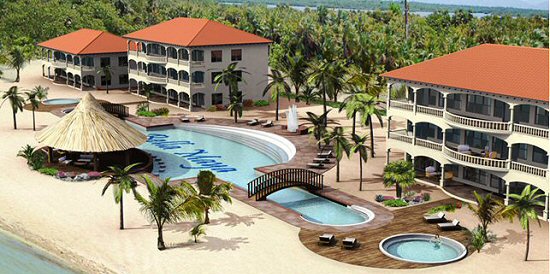

Finally, many popular travel destinations are ecologically or historically sensitive areas, and, as beautiful as they may be (e.g. Machu Picchu, the Galapagos, the Indonesian or Brazilian rain forests, etc.), the more people that travel to these areas leads to more strain on their integrity, through such issues as the introduction of invasive species or the erosion of the local culture and loss of its language / history.
Damn, so why travel at all? And is there a way to do it sustainably?
Yes and no. To return to my tribalist ideals for a moment: in theory, none of us should travel, as any movement on our part has an environmental impact. In practice, of course, that isn't gonna happen. Travel, of course, isn't all bad - there is definitely something to be said for the potential life-changing inspiration that we "Annex I" nationals can obtain from travel to areas poorer than ours. But how can we value this non-tangible benefit with the very tangible downfalls listed above? While difficult, I would venture a guess that the net downfalls are currently exceeding the net benefits, if only because of our massively increasing population of travellers.

So how can we change this? - A change in mindset and priorities.
There are many increasingly popular forms of (more) sustainable travel, but they require us to shift from a destination- and "me"-focused mindset to a journey- and "us"-focused one instead. What do I mean by this? Well, compare these 2 possible trips:
1) Flight to Mexico, Drive to gated-resort community, Lounge on the beach being served by locals, Party in your 5-star resort
2) Hop on a cargo ship over to Asia, travel around the countries there by train, interacting with the locals, and volunteering with local social or environmental groups
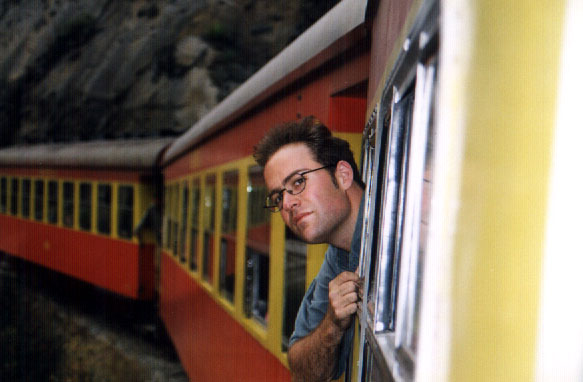
While the second trip is by no means environmentally perfect, I would argue that it is the ideal that we must strive for in our travel, since not only does it reduce our environmental impact, but it also reminds us that we are guests - not Kings - in foreign lands and must conduct ourselves with a great deal of respect if we are to be given the same in return. I would argue that this second trip would strengthen our social capital (participation, connections, tolerance of diversity, value of life, social agency) immensely, slow our pace of life, make us appreciate things we normally wouldn't, and allow a greater opportunity for the aforementioned life-changing inspirations to occur. For example, we could learn such little things as sharing!:
http://blog.islandpress.org/297/tim-beatley-can-americans-learn-to-share
I am, of course, a realist, and know that resorts and travel for luxury purposes will continue to pervade our world, so first-order changes must accompany these lofty second-order changes. The eternal quick fix is technology, which we can harness to reduce our travel impacts immediately while the charismatic idealists among us go about promoting a future new way of life.
For example, eco-resorts have begun to take off, with a particularly impressive one being built in California:

http://earth911.com/blog/2009/02/04/new-resort-to-be-most-eco-innovative-in-world/
Recent advances in biofuels for aircraft are also giving cause for optimism. For example, the first test flights were recently completed using jatropha - a plant-based oil:
http://www.businessgreen.com/business-green/news/2233235/air-zealand-delcares-first
Big names are also now talking about the emissions from ships, which carry ~90% of the world's international trade goods:
http://news.alibaba.com/article/detail/finance/100010048-1-un-body-finalise-action-ship.html
All of this comes back to my original point, which is that I myself hope to travel sustainably in the coming years. Once I scrounge together enough money, I hope to completely circumnavigate the globe without the use of air travel. My attempted route will be ambitious (Vancouver to the East Coast via train, ship to Europe, train through Europe, travel with an overland truck expedition down and up through Africa, train back through Europe again, train across Asia to Beijing, train back through China to Tibet, Bhutan, and Nepal, then more trains around India, a ship from India to Southeast Asia, train around Laos / Vietnam / Cambodia / etc., ship down to Australia and travel around there, ship across to South America and do likewise, then travel up through the Caribbean to Florida and back home North-west through the States) and would take several years.
I would also attempt to give back as much as I could, through innovative volunteer projects such as those from the Global Volunteer Network:
http://www.volunteer.org.nz/programs/
or something a bit more off-the-beaten-path, such as WWOOF-ing (volunteering on an organic farm):
http://www.wwoof.org/
Large sums of monetary donations will be happily accepted to help my cause! :)
In short, travel is a key area that we can all work on to reduce our ecological footprints. By changing the way we travel, we can not only help maintain our environment, but also foster a much deeper sense of global community and social capital within ourselves!
Until next time..


No comments:
Post a Comment